
Our Curriculum
Learning through play, preparing for life
The Montessori Approach
Sheen Montessori Nursery School follows the authentic Montessori method, developed by Dr Maria Montessori. This educational philosophy is built on observation of how children naturally learn - with hands-on materials, freedom of choice, and respect for each child's developmental pace.
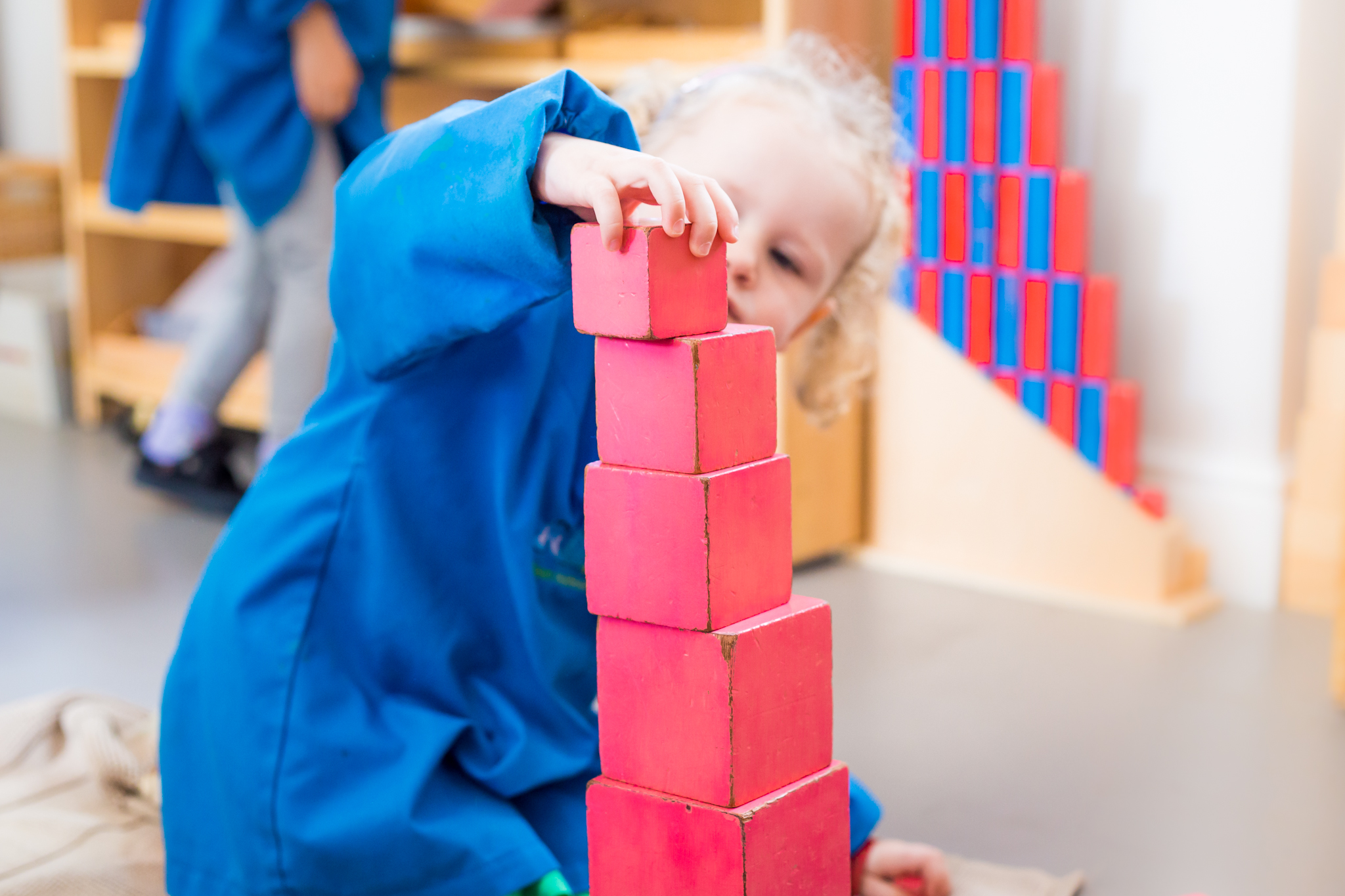
The Prepared Environment
Our classrooms are carefully designed "prepared environments" containing carefully ordered materials at child height. Everything has a place, and each material teaches a specific concept. Children choose activities based on their interests and developmental needs.
Mixed-Age Classrooms
Our three classrooms - Bronte, Darwin, and Newton - group children aged 2-5 together. Older children model learning for younger ones, and younger children are inspired by their peers' abilities. This creates a rich learning community.
Child-Led Learning
Children select their own work, follow their interests, and spend uninterrupted time engaged in activities. The teacher observes and guides rather than directs, supporting each child's innate drive to learn and explore.
Hands-On Discovery
The Montessori materials are self-correcting and sensory-rich. Children learn through direct manipulation and discovery rather than instruction. This builds confidence, problem-solving, and independence.
Areas of Montessori Curriculum
Our prepared environment includes carefully designed materials across five key areas:
Practical Life
Care of self and environment activities (pouring, sweeping, buttoning, washing) develop fine and gross motor skills while building independence and confidence. These everyday activities are the foundation of Montessori learning.
Sensorial Development
Children explore materials through their senses - textures, colours, weights, sounds. Sensorial materials develop discrimination, observation, and vocabulary while preparing children for later academic learning.
Language & Literacy
Children begin with phonetic awareness through sandpaper letters and move to word-building, sentence composition, and reading. The Montessori method introduces letters through touch and sound, making learning multi-sensory and engaging.
Mathematics
Concrete materials (beads, rods, number boards) make abstract concepts tangible. Children progress from sensorial introduction to number recognition, counting, addition, subtraction, and early multiplication at their own pace.
Cultural Studies
Geography, science, history, and social studies materials introduce children to the wider world. Globes, maps, nature specimens, and cultural activities spark curiosity about people, places, and how things work.
Observing and Supporting Each Child
In the Montessori approach, the teacher is an observer first. We watch each child carefully to understand their interests, strengths, and developmental needs. This observation guides us in providing the right materials and challenges at the right time.
Your child's progress is documented in their personal "Learning Journey" - a portfolio filled with photos, observations, notes about their discoveries, and examples of their work. This becomes a treasured record of their development and growth at Sheen Montessori.
The Role of the Teacher
In our Montessori classrooms, the teacher's role is quite different from traditional education. We:
- Prepare the environment with carefully selected materials and resources
- Observe children to understand their interests and readiness
- Demonstrate activities briefly and step back to allow independence
- Provide guidance and support without controlling learning
- Follow the child's natural curiosity and pace
- Encourage problem-solving and self-correction using the materials themselves
Concentration & Flow
One of the most beautiful aspects of Montessori learning is the deep concentration children develop. When engaged in self-chosen work with materials they're ready for, children enter a state of "flow" - becoming completely absorbed in their activity. We protect this precious focus time, understanding that concentration is being built, not just knowledge being acquired.
Practical Independence & Life Skills
The Montessori curriculum emphasizes practical life from the beginning. Children learn:
- Self-care: washing hands, dressing, using the toilet independently
- Care of the environment: cleaning, organizing, tidying
- Care of others: helping peers, collaborating, social grace and courtesy
- Grace and courtesy: polite interactions, considerate communication
These practical skills are the foundation for academic learning and confident, independent children.
Preparing for School Transition
While we respect the child's natural developmental pace, we recognize that our older children will transition to reception class. Our approach naturally supports school readiness:
- Concentration & Focus: Montessori work develops the sustained attention needed for classroom learning
- Independence: Children manage their own work, make choices, and solve problems
- Following Instructions: Our guided activities teach children to listen and respond to directions
- Literacy & Numeracy: The Montessori curriculum covers phonics, reading, counting, and mathematical concepts naturally through materials
- Social Skills: Mixed-age classrooms develop peer relationships, cooperation, and emotional intelligence